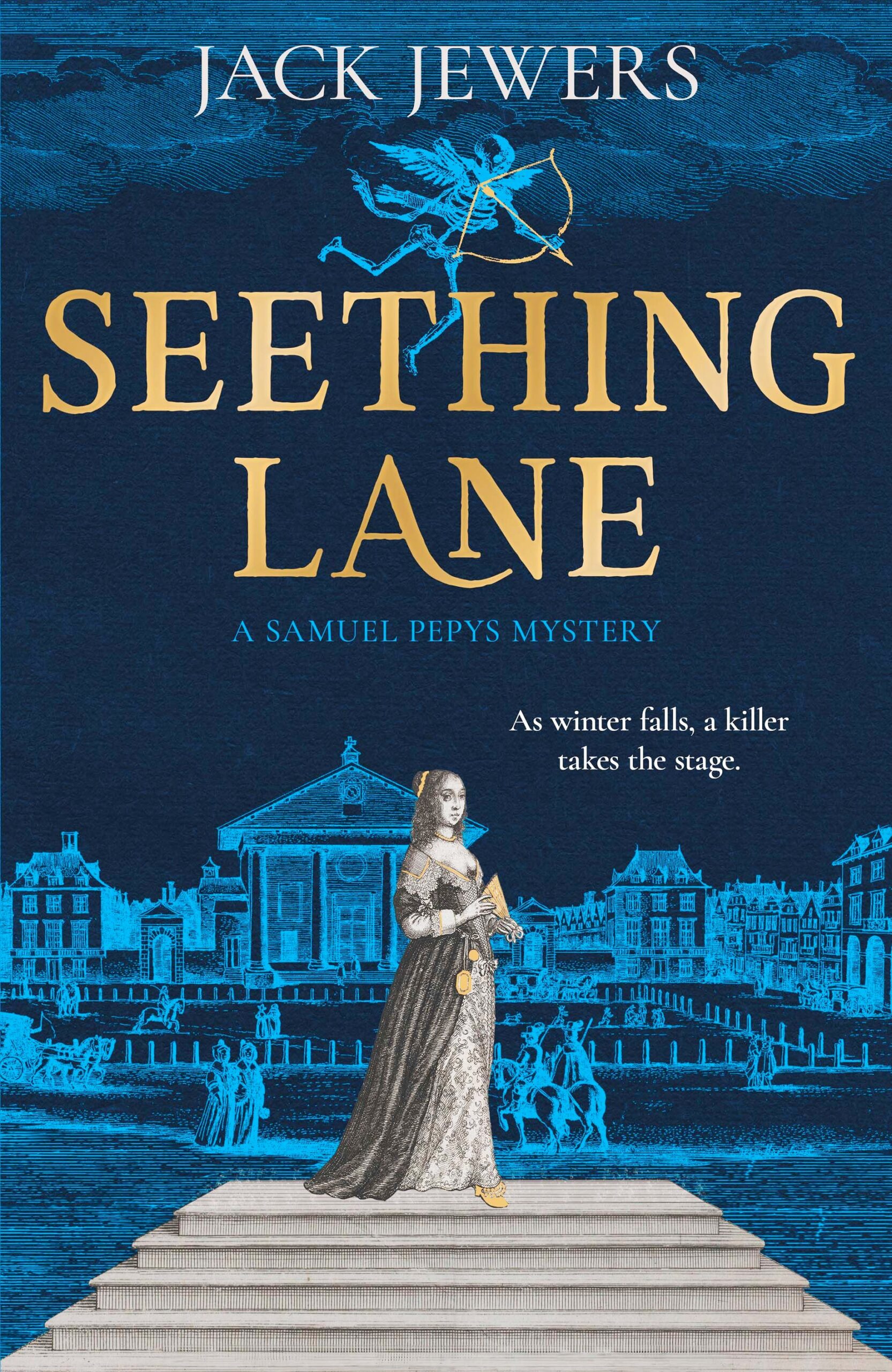
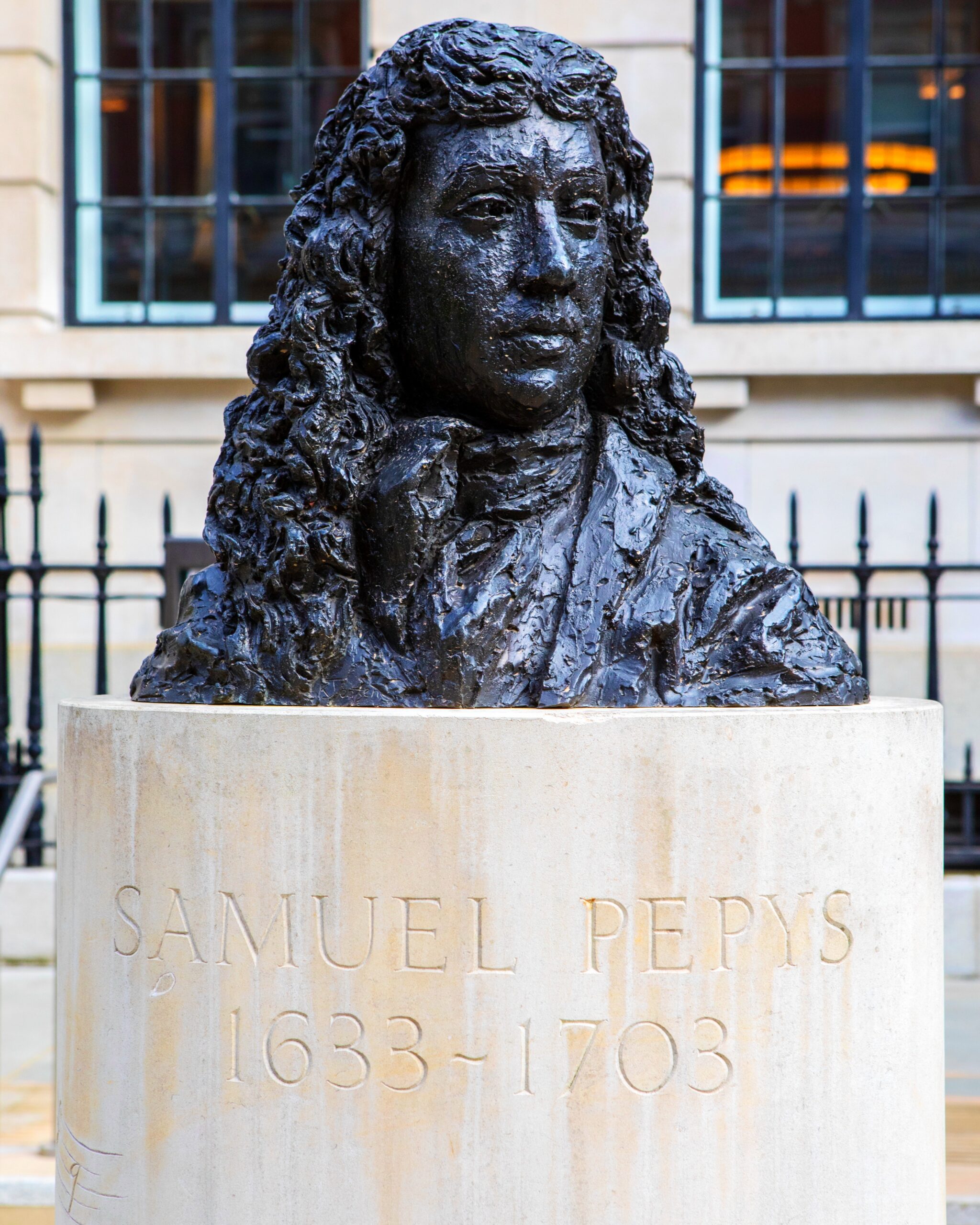
As an avid book lover (1000 books and counting), it is rare that I find a novel that genuinely surprises me. Seething Lane by Jack Jewers is an exception to the rule. Beneath its murder mystery lies something altogether more curious: a world of secrets, theatre, religious dissent and wonderfully complicated characters, all wrapped around one of history’s most fascinating diarists, Samuel Pepys. Pepys was a naval administrator, politician, theatre enthusiast and inveterate observer of the world around him. Pepys documented Restoration London with an extraordinary intimacy. His diary captures its pleasures and scandals, its politics and plague, its theatres and fires — as well as the less flattering details of his own life. It is this deeply flawed and problematic man that Jewers places at the heart of Seething Lane. But rather than simply recreating the Pepys we know from the pages of his diary, he imagines what might happen if Pepys himself became entangled in a murder investigation. The result is a version of history that feels both recognisable and entirely unexpected. I spoke with Jack about the man behind the diary and the people and worlds surrounding him. We explored the challenge of writing a fictional Pepys without softening his more troubling flaws.
On the other hand, we have Nell Gwyn. At the time, the rigid class structures, sexual politics and royal dynamics of 17th-century London judged women harshly. But Nell was different. Despite the scrutiny surrounding her, she became a beloved public figure, known for her wit, irreverence and larger-than-life personality. She was a successful comic actress, mistress to King Charles II and one of the most famous figures of Restoration London. Nell crossed boundaries of class, gender and celebrity that few women of her time were able to. She rose from poverty to become one of the most recognisable actresses of the Restoration stage, then found herself at the heart of royal life. Including her in Seething Lane opens a different door into Pepys’s London: one shaped not only by politics and power, but by performance, ambition and women who commanded a room.
As well as the inclusion of two stalwarts in 17th Century history, Jack Jewers explores complex themes like religious dissent, murder, and restoration theatre. In the Seething Lane Q&A Jack outlines how theatre often verges on the surreal. And he’s right. With its elaborate costumes, shifting identities and carefully constructed illusions, it makes it the perfect backdrop for a ‘murder mystery’. For Pepys who spent much of his life observing both people and plays, being a detective in Seething Lane is a natural character arc. After all, it uses both a time period and location where nothing is quite as it seems and the line between performance and reality become dangerously blurred. Pepys himself was facinated by the theatre, and even saw Nell Gwyn in ‘The Maiden Queen’. He was mesmerized by her characterization of Florimel in a ‘breeches role’, writing: “[I] cannot meet with any woman, true or counterfeit, that do it like her.” Gwyn’s prowess allowed her to parody, subvert, and strip away the rigid gender binaries of the 17th century.

Credit @LornaRoach
Another stand out component in Seething Lane is the gothic profession of the Searchers of the Dead. These were parish-appointed women whose job was to inspect causes and determine the cause of death. However, they were marginalized. Poor older women who had very little formal medical training. They occupied an unsettling position between medicine, superstition and death. Although Searchers of the Dead weren’t accused of being witches, they were distrusted and isolated for their profession. This makes the Billingsgate Witch in Seething Lane a fantastic character choice. Taking a little known profession choice and placing it at the heart of the murder mystery. Giving the Billingsgate Witch an eerie authority over the very thing Pepys is trying to understand: death. Although the Billingsgate Witch is fictional, she feels like the kind of character history might have forgotten to record. Through her, Jewers gives the novel access to the people who existed beyond Pepys’ immediate world — those without titles, influence or a voice in the historical record, but who still inhabited the same streets and witnessed the same city.
Which raises the question: what made these particular characters and stories worth bringing back to life? Join me for the Seething Lane Q&A, where we dissect Restoration London, Surrealism in theatre, and the real people behind the fiction!
1. Pepys was a deeply flawed man. How do you make a morally questionable protagonist compelling without asking readers to excuse him?
The tension between those two things was central to the way I approached the character of Samuel Pepys. While I’ve tried to capture what makes him so fascinating as an historical figure, it’s important to remember that my Pepys is not the Pepys. He’s a fictional character, even though he’s based on a real person – an extremely interesting person, but also, as you say, a deeply flawed one. But I was free to reshape certain aspects of his character into something more relatable to a modern reader. I get to put him in situations where he has his prejudices challenged. In other words, my Pepys faces consequences! One obvious example of this is in his relationship with his wife, Elisabeth, which he has a genuine desire to repair after years of inveterate cheating. The challenge for me as a writer is for my version of Pepys to undergo enough of that process without it feeling convenient or forced. But he’s definitely still a rogue, still an antihero.
2. The murder investigation takes Pepys into some of the darker corners of Restoration London, but the book also spends a great deal of time in the theatre world. What was it about theatre that made it such a natural setting for a murder mystery?
I don’t know if you’ve spent much time backstage at theatres, but they’re quite surreal spaces. For an audience, theatres are places of illusion and mystery. For performers, and the people who make the shows happen, they’re functional to the point of absurdity – everything must run like clockwork or nothing works at all. The closer you get to the stage itself, the more they become this curious mixture of the two.
Pepys was an enormous lover of the theatre. He regularly went to see plays and left pithy reviews in his diary. For example, he described A Midsummer Night’s Dream as ‘The most insipid, ridiculous play I ever saw.’ So when, in Seething Lane, Pepys is told that he has to investigate the connection between a brutal double murder and his favourite theatre on Drury Lane, it is both an exciting and an intimidating prospect for him. He is literally and figuratively seeing behind the curtain, in a place where nothing is as it seems.
3. Nell Gwyn was both a successful actress and Charles II’s mistress. How did you approach writing her beyond her relationship with the king?
Nell Gwyn was a survivor. She was abandoned on the streets of Covent Garden as a little girl, where she had to survive by whatever means she could. Her big turn of fortune came when she was fourteen, working as an orange seller at the Theatre Royal. She had such an easy banter with the audience – who came to see her as much as they did the plays – that she was essentially talent spotted and put on the stage. And she turned out to be an extremely talented comic actress.
So before you even get to the point in her life when she met the king, you have a portrait of a young woman who was forceful, feisty, very quick-witted, yet fiercely self-protective. Given that, I decided that two defining feature of my version of Nell would be an extremely active bullshit detector, and very little in the way of a verbal filter. She obviously had to be funny and charming too. Physically, Nell was considered pretty, rather than beautiful. So it was through the force of her personality, and her talent, that she got where she did – the first true celebrity actress in history, and mistress to the king, with whom she went on to have two children. I also threw in a few specific personality traits from real actresses I’ve known, for good measure. But before you ask, my lips are sealed!

@LornaRoach
4. The book features the ‘searchers of the dead’, including the Billingsgate Witch. What fascinated you most about this unusual historical profession?
It’s about the most goth thing imaginable to have on your CV isn’t it? Searchers of the dead were real people who were employed to investigate corpses for signs of what killed them. Essentially, they were like basic versions of modern pathologists, although their methods were very crude. It was also a very high-risk enterprise, given how many people died of contagious diseases.
As a result of this, it was a profession that most people saw as unclean and somewhat unnatural. I mean, it’s right there in the job title isn’t it? Is it any wonder that someone called a ‘searcher of the dead’ was viewed with unease, and sometimes outright fear? But there’s also an interesting social aspect to this, too, because the pariah status of the searchers meant that they were often drawn from those on the fringes of society – outcasts, those with no family, or awkward social status. The job was reasonably well paid, and so it became a profession that was particularly suited to poor, older women with no other means of support. It doesn’t take a big leap of the imagination to see the connection with witches in people’s minds.
In truth, searchers of the dead were more of a Tudor profession than a Restoration one, although they existed until the practise of formally registering deaths was made law in 1836. The Billingsgate Witch was one of my favourite characters to create in Seething Lane and I’d love to bring her back in future books.
5.Pepys goes undercover to investigate Inigo Wrath, a radical preacher. What drew you to this story of religious dissent and secrecy?
I have this theory that the wounds of the English Civil War run so deep that we still haven’t really come to terms with them, nearly 400 years later. Adjusted for population, it was by far the bloodiest war in British history, culminating in the execution of the king, and radical changes not only in how the country was governed, but in how it saw itself. Swirling around all of that was a lot of religious extremism – including the Puritans, who ended up in charge for ten, very turbulent years. Seething Lane takes place in 1670, a decade after the return of King Charles II from exile. It was a time when a lot of the religious conflict that had raged since before the Civil War had settled down, and the established church was a more moderate – at least for the time – version of Protestant Christianity. But there was still a whole host of sects and other dissenters swirling around, many of them with spiritual beliefs that crossed the line into areas that were considered politically dangerous. Inigo Wrath is representative of the kind of charismatic, tub-thumping radical that the establishment viewed as a threat to law and order. Sometimes with good reason…
@moonflowerbooks
6. Which is more dangerous in Seething Lane: knowing too much or pretending to know nothing?
Ooh, what a brilliant question! I think in both cases it depends less on what you know, than on who knows you know it. If you pretend to know nothing, but someone who can do you harm doesn’t believe that to be true, that’s more dangerous than simply knowing too much. And, do you know, it’s just possible that comes up in the book…
7. Your Pepys is surrounded by people performing versions of themselves. Is anyone in the novel entirely honest?
I’d have to say Pepys himself, by virtue of the fact that the story is told through his diary. Many people who keep diaries tend to edit events to make themselves look better, but the real Pepys was surprisingly frank and honest about his failings and well as his successes. That’s an approach I’ve carried over to my version of Pepys in the book. He’s quite the opposite of an unreliable narrator – he’s painfully honest, whether or not events paint him in a good light. And sometimes they don’t.
8. If you could erase one thing from Pepys’s diary and replace it with an event from Seething Lane, what would you choose?
Without a doubt, the production of As You Like It that Pepys watches take shape at Drury Lane Theatre. It would be a treat to read Pepys’ thoughts on what it was like to actually put on a play in Restoration London, and not just watch the end result.
9. What did Nell Gwyn allow you to explore about Restoration London that Pepys couldn’t?
I think Nell does quite like Pepys, but she also gets to deliver him a few truth bombs – particularly when it comes things that are well outside his own experience, such as the reality of living the hand-to-mouth existence of a jobbing actor. She is his connection both to the highest echelons of society, via the king, and the lowest, via her own background. So Nell allowed me to explore issues around class and gender more freely than Pepys would ever have been able to by himself. Plus, she was a bona fide star! He exists in her orbit, like the most glittering of celebrities today. No wonder he fancies her.
10. By the end of Seething Lane, Pepys has faced murder, espionage and intrigue. Having spent so much time in his head, what do you think the real Pepys would make of the novel?
I would love to say that he’d get misty-eyed, pat me on the shoulder and say that I’d done a great job, but in reality he’d probably say something mildly bitchy and go to the pub. Although I’m sure he’d find the ending a gut punch. Why? Well, that would be telling…
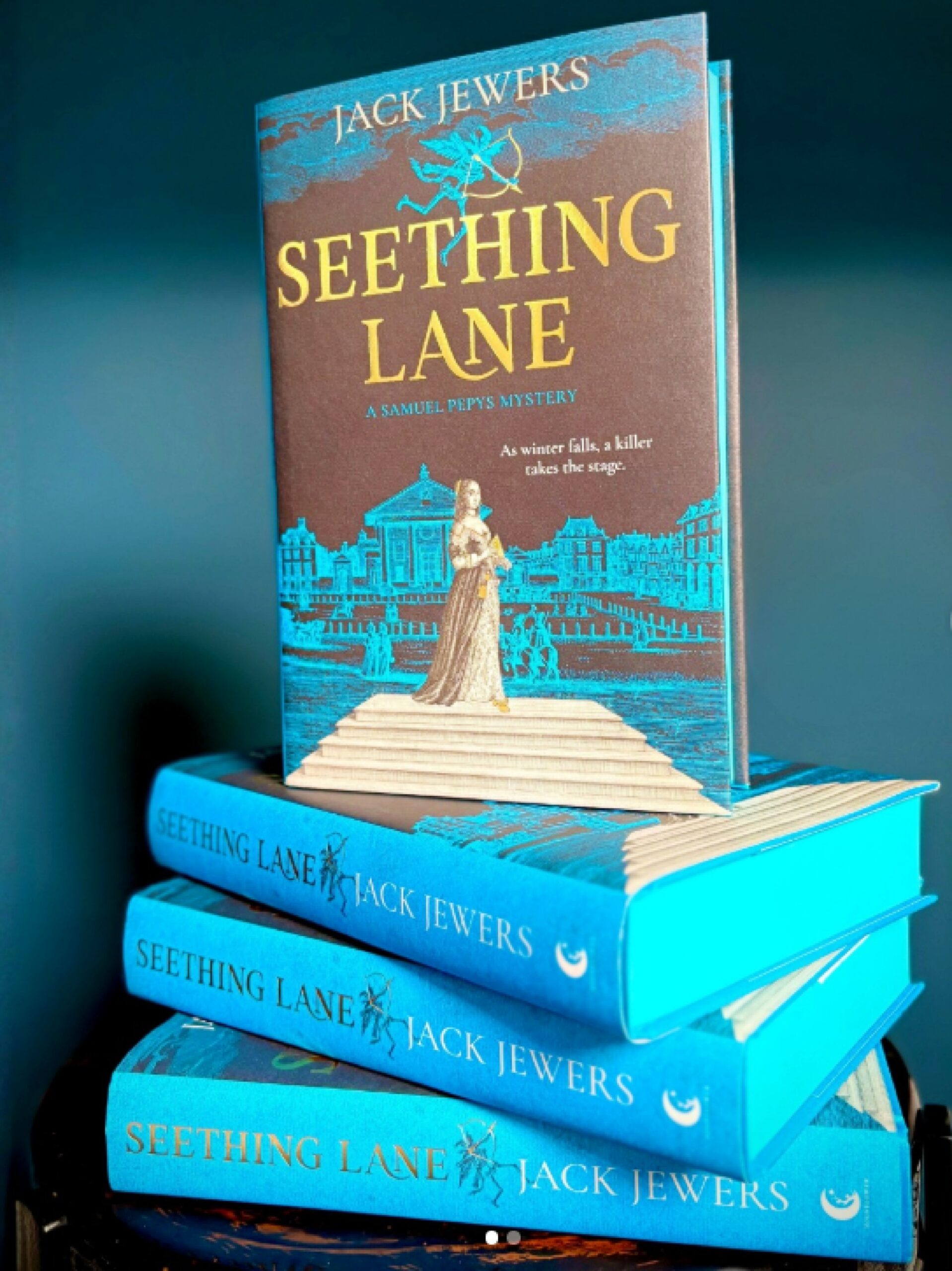
Seething Lane by Jack Jewers is published in hardback, eBook and audio on 3rd September 2026 (Moonflower, £18.99). Available online here. Author of The Lost Diaries of Samuel Pepys.
What Are Your Thoughts On Seething Lane By Jack Jewers?
*Disclaimer
Please note, I was kindly gifted a copy of Seething Lane, in exchange for this write up. All thoughts are my own and are not affected by gifting. I would love to know which part of the Seething Lane Q&A you enjoyed the most!


Leave a Reply